
Lookup Vehicle History & Build Sheet for any Restomod
Buying, selling, or building a restomod? Run a restomod VIN check to view the car's available history and recreate the classic build sheet. Confirm factory specifications, title status, accident records, and more to make an informed decision.


What Is a Restomod VIN Check?
A restomod VIN check uses the Vehicle Identification Number (VIN) to pull two records: either the original factory build sheet or the vehicle history report. It works for pre-1981 classic and modern VINs alike.
This ensures you don't have to guess what a restomod started as. Whether you’re buying or selling a completely built restomod, or building from a donor, this tool allows you to instantly get accurate data on factory specs, title status, and the available history records.
Why a Restomod Needs a Special Kind of VIN Check
Most modern VIN check tools are built for cars made after 1981. Restomods often start life as pre-1981 classic vehicles, so standard VIN decoders can miss or misread key information.
Modern VIN Tools Miss Classic Car Data
Pre-1981 VINs are often shorter than today's 17-character format. Standard decoders expect the modern layout, so they skip or misread classic car data.
What Makes Restomods Extra Risky to Buy Blind
Restomods mix an old body with new parts. That combination makes it harder to confirm what's original and what's been swapped or upgraded.
Vehicle History Report Vs. Build Sheet: What's the Difference?
You can get the two records using our Restomod VIN lookup tool, but they answer different questions. One shows how the car was built while the other shows what happened after it left the factory. Here’s how they both compare:
Vehicle History Report | Build Sheet | |
Covers | Life of the car after production. | Factory build information |
Shows | Title, mileage, accidents, ownership, theft, auction, liens, and more | Engine, trim, options, paint color, other factory details |
Best for | Buying, selling, fraud checks | Restoration and provenance |
Answers | "What has happened to it since?" | "What was it built with?" |
Restomod VIN History or Build Sheet: Which Record Do You Need?
Choosing between a restomod vehicle history report and build sheet depends on your goal. Each record provides different details to help you buy, build, or sell a restomod.
When Buying
A vehicle history report helps you check a restomod's background before purchasing, while reducing risks and helping you make a more informed decision.
Check for Potential Red Flags
Review available accident, title, mileage, and theft records to identify potential concerns before investing in a fully built restomod.
Confirm Vehicle Identity
Compare the VIN with available records and paperwork to spot inconsistencies and check whether the seller's vehicle details match.
When Building
A build sheet helps restomod builders understand a donor car's original factory specifications before modifying it and planning upgrades for the project.
Identify Original Specifications
Check the original engine, trim, paint color, and factory options to understand the donor vehicle's configuration before starting modifications.
Plan Your Build
Use factory specifications as a reference when choosing upgrades, tracking changes, and documenting the project for future maintenance or resale.
When Selling
A vehicle history report helps sellers explain a restomod's background, answer buyer questions, and provide useful records that support a transparent sale.
Build Buyer Confidence
Share available history records to help buyers understand the vehicle's background, address concerns, and feel more confident about purchasing it.
Support Your Asking Price
Combine history records with build receipts, restoration photos, and upgrade details to explain the vehicle's condition and support your asking price.
What’s Included in the Restomod History Report
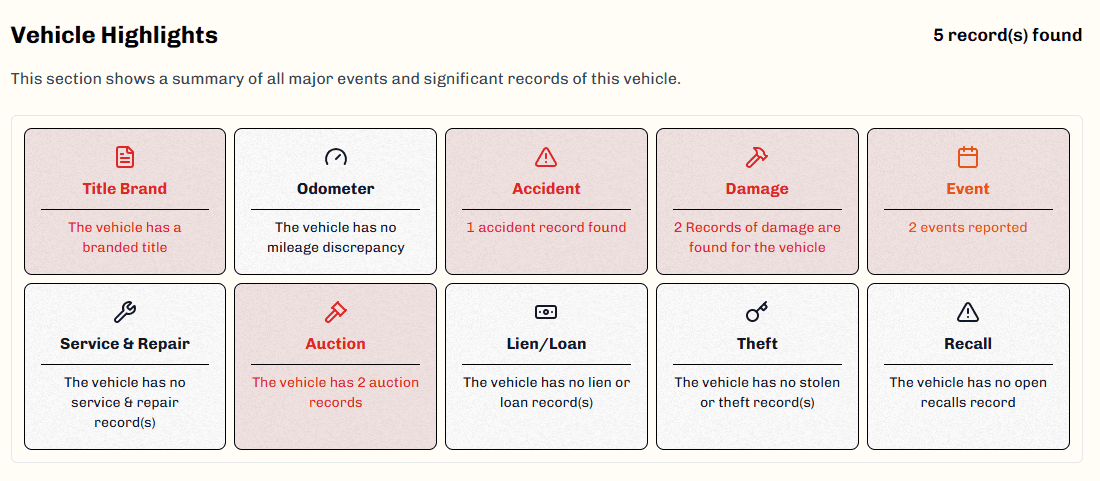
A classic vehicle history report shows what happened to the car after it left the factory. Here's what's typically included.
Detailed Factory Specifications
See the car's original year, make, model, and factory-installed equipment as recorded at production.
Auction Records & Photos
Check past auction listings and photos, which can reveal condition changes or resale history.
Title Status and Brands
Find out if the title is clean, salvage, rebuilt, or flagged for other problems.
Sales Records
Review recorded sale dates and prices to understand the car's market history.
Mileage History
Compare reported mileage over time to catch possible odometer rollbacks or gaps.
Accident & Damage Records
See reported accidents, structural damage, or major repairs tied to the VIN.
Theft & Recovery Status
Confirm whether the vehicle was ever reported stolen or recovered after theft.
Ownership Records
View how many owners the vehicle has had and when ownership changes were recorded.
Lien and Loan Records
Check for active liens or loans that could affect a clean ownership transfer.
What You Can Learn from the Restomod Build Sheet
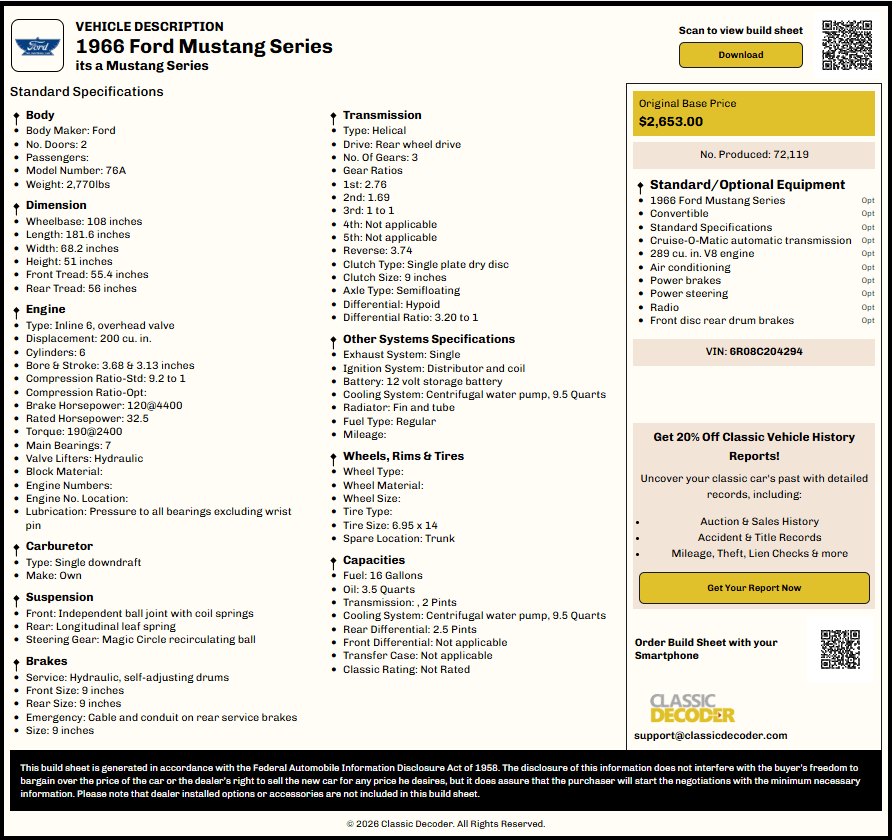
A build sheet shows how the car left the factory. Here's the kind of factory detail you can expect to see.
Year, Make, Model
Confirm the exact year, make, and model as originally assigned to this VIN.
Factory Options
See which factory options and packages were selected when the car was built.
Engine Specs
Check the original engine code, size, and configuration straight from factory records.
Transmission
Find out whether the car left the factory with a manual or automatic transmission.
Suspension
Review the original suspension setup, including springs and factory ride height specs.
Carburetor
See the factory carburetor type and specification listed for the original engine.
Capacities and Dimensions
Check factory-listed fluid capacities, weight, and dimensions for the original vehicle.
Original Base Price
See the car's original base price as it left the factory floor.
Wheels, Rims, & Tires
Review the factory wheel, rim, and tire specifications for the original build.
How Our Restomod VIN Lookup Tool Works
Getting your restomod's history report or build sheet takes just a few minutes. Here's how the process works, step by step.
- 1
Enter the Restomod VIN
Enter the VIN into the form at the top of the page. To get a build sheet, select "Get Build Sheet" first. - 2
Submit the Form
Submit the form for an instant preview showing the year, make, model, trim, transmission, and engine. No payment needed for this step. - 3
Get Your Restomod VIN History or Build Sheet
Make the necessary payment to view and download the history report or build sheet, depending on the information you’re looking for.
What a Restomod VIN Check Cannot Tell You
No VIN check is perfect, even for classic cars. Here's what our restomod VIN check tool cannot confirm on its own.
Every Modification
A restomod VIN check won't list every custom part added during a restomod build. Some changes go undocumented.
Quality of the Work
A vehicle history report can't tell you if the restomod work was done well. That still requires a physical inspection.
Current Mechanical Condition
Both the available history and build data don't reflect how the car runs today. You should always test drive before buying.
Complete Restoration History
Not every repair or restoration step gets recorded. Some work happens without paperwork or public records.
Originality or Matching Numbers
A Restomod VIN lookup can't confirm numbers-matching status on its own. A trained inspector should verify this in person.
Aftermarket Part Sourcing
A VIN check won't show where aftermarket parts came from or whether they meet safety standards.
Where to Find the VIN on a Restomod?
Finding a restomod VIN can be harder on older cars because pre-1981 vehicles used different identification formats and locations depending on their manufacturer, model, and production year.
Pre-1950 Classic Cars
- ▶Check the frame or chassis, firewall, and engine compartment.
- ▶Some early Ford models have serial numbers stamped on the engine or frame.
1950–1959 Classic Cars
- ▶Look at the driver-side door jamb, firewall, frame, or engine compartment.
- ▶Some models place identification numbers in less visible locations.
1960–1967 Classic Cars
- ▶Check the driver-side door jamb, dashboard, firewall, or frame.
- ▶On 1963–1967 Chevrolet Corvettes, look beneath the glove box on the instrument-panel support brace.
1968–1980 Classic Cars
- ▶Check the driver-side dashboard through the windshield, door jamb, firewall, or frame.
- ▶Many Chevrolet Camaros have dashboard VINs, while 1968–1980 Corvettes typically have them on the driver-side windshield post.
Why Choose Our Restomod VIN Lookup Tool?
There are a lot of VIN tools out there. Here's why restomod owners, buyers, and sellers choose ours.
Decode & Access Accurate Classic Car Data
We specialize in classic and pre-1981 vehicles, where most modern VIN tools fall short.
Instant History & Build Sheet Lookup
Get a free preview of the vehicle specs in seconds, with full reports ready right after checkout.
Support for Pre-1981 & Modern VINs
Our tool is built to read both short classic VINs (5-14 digits) and standard 17-character modern formats.
24/7 Customer Support
If you have questions about your report or how our tools work, our support team is always available to help out.
Restomod Market Snapshot: Why Demand Keeps Climbing
The restomod market is worth about $7.9 billion in 2026, and it's still growing fast. Industry analysts expect the global classic car restoration and restomod services market to reach $14.4 billion within the next decade.
Restomod builds already make up close to 40% of that market, with muscle cars leading demand. As more buyers want classic looks with modern reliability, the demand is pushing restomod prices and build quality higher every year. As prices climb, confirming a car's build details and history matters more than ever.
.png&w=1920&q=75)
Instantly Check Your Restomod VIN Now
Don't buy, sell, or build a restomod on guesswork. Run the VIN now to get the classic build sheet and/or vehicle history report in under a minute.
Frequently Asked Questions About Restomod VIN Check
Yes, you can check a restomod by VIN. Our tool searches available vehicle history and factory build records tied to that specific VIN, including classic and pre-1981 formats.
Yes, a restomod build sheet can often be found by VIN. It pulls the car's original factory configuration, including engine, transmission, trim, and installed options.
A VIN itself does not show restomod modifications. It shows the car's original factory build. Custom changes made later usually aren't recorded on the VIN.
Yes, a VIN check can show a classic car's available history, including title status, reported accidents, ownership changes, mileage records, auction records, sales history, theft status, and more, when that data is available.
Yes, you should check a restomod before buying it. A VIN check can reveal title problems, mileage discrepancies, or theft records before you commit to a purchase.
A restomod VIN check can show accident history when it has been reported and recorded. Not every repair or damage event gets documented, though.
Yes, when the VIN is used to look up the build sheet, you will see the original engine specifications the car left the factory with.
Yes, most restomods keep their original VIN, since it's usually stamped into the body or frame that stays with the car during the build.
You verify a restomod's history by running a VIN check for title records, ownership history, and accident reports, then confirming details with a physical inspection.
No. A VIN report alone does not prove a restomod is authentic. It supports authenticity claims with factory data, but a hands-on inspection confirms the rest.