
Decode Classic VINs to Get Vehicle History Report and Build Sheet
Recommended Classic VIN Lookup Tools

Classic cars are pieces of arts that portray human creativity, passion and innovation. There are other ones constructed in extremely few numbers and today are invaluable relics. These vintage, unique cars are treasured because of their beauty, performance, and protracted impact on the design of cars.
The 11 most iconic and rarest classic cars of all time are listed below and each one of them has an exciting story that continues to thrill car lovers the world over today.
Key Takeaways
- 1.The rare classic cars are unique in the sense that few were manufactured, they possess special features or there have a legendary history.
- 2.The cars retained their value due to the fact that they are collected by collectors because they rare to come by. It is extremely difficult to find one that is original and clean nowadays
- 3.Knowing what makes a car truly rare helps you spot the real deals, avoid getting fooled by clones, and invest your money in something that really worth it.
1953 Jaguar XK120-C (C-Type)
 Estimated Value: $5-6 million
- Number Produced: 53
- Unique Attribute: First Jaguar designed for racing with disc brakes
- Engine: 3.4L inline-6
- Horsepower: 205 hp
- Transmission: 4-speed manual
- Top Speed: 150 mph
The Jaguar XK120-C or C-type transformed racing in the early 50s. It was constructed to be fast and agile with an aluminum body that was light and powerful. Its high-tech disc brakes provided Jaguar with a huge advantage in the racetrack.
The C-type was the winner of the 24 hours of Le Mans twice, which made it a representation of the genius of the engineering of Jaguar. It has been one of the most popular and sought-after British cars of all time due to its combination of graceful curves and race performance.
1954 Oldsmobile F-88
- Estimated Value: $3.5 million
- Number Produced: 4
- Unique Attribute: Fiberglass-bodied American concept car
- Engine: 5.3L Rocket V8
- Horsepower: 250 hp
- Transmission: 4-speed automatic
- Top Speed: 150 mph
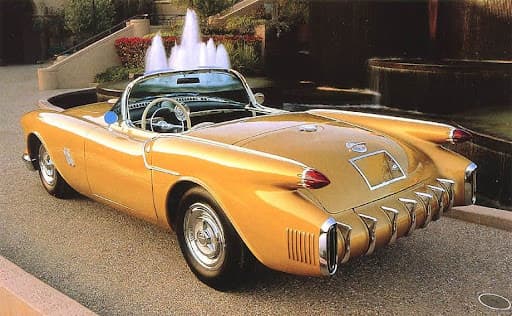
Oldsmobile F-88 of 1954 was a dream car that showed how the future would be. It was built as a demonstration, and was not meant to be built in large quantities, but its style created an impression everywhere it was seen.
It was among the earliest American sports cars due to its low and smooth body and powerful Rocket V8. The F-88 is currently the only F-88, and it is on display in a museum, so it is one of the most valuable and rare cars of the golden age of American automotive design.
1955 Mercedes 300SL Gullwing
- Estimated Value: $2 million
- Number Produced: 1,400
- Unique Attribute: Famous upward-opening “Gullwing” doors
- Engine: 3.0L inline-6 with direct fuel injection
- Horsepower: 215 hp
- Transmission: 4-speed manual
- Top Speed: 163 mph
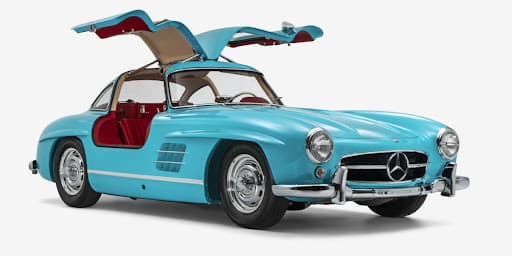
The Mercedes 300SL was a marvel in its time and its design was a futuristic one that was unmatched in terms of engineering. The doors were gullwing and this has made it appear unique even in the modern days.
It was also the first direct fuel injection production car, and one of the fastest road cars of the 1950s. The 300SL is the epitome of the finest luxury, innovation, and pure driving thrill in one classic package by Mercedes-Benz.
READ ALSO: The Most Expensive Classic Cars
1955 Mercedes-Benz 300 SLR Uhlenhaut Coupé
- Estimated Value: Over $143 million
- Number Produced: 2
- Unique Attribute: Gullwing doors and race-derived engineering
- Engine: 3.0-liter straight-eight
- Horsepower: 310 hp
- Transmission: 5-speed manual
- Top Speed: Around 180 mph
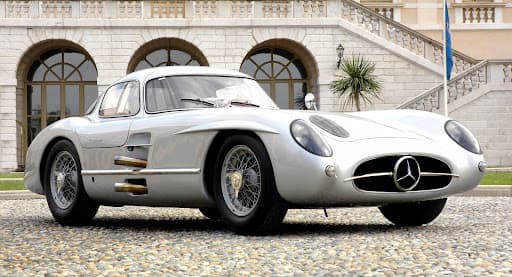
Mercedes-Benz 300 SLR Uhlenhaut Coupe of 1955 is a masterpiece. It was constructed as a road version of the 300 SLR race car produced by Mercedes of which only two were ever produced. It had gullwing doors, which were its trademark and a lightweight body was coupled with racing background.
It had a 3.0 liter straight-eight of 310 horsepower; it could go up to 180 mph. One of them cost more than $143 million which is the most expensive in the world and one of the rarest classics in the world.
1956 Aston Martin DBR1
- Estimated Value: $25 million
- Number Produced: 5
- Unique Attribute: 1959 Le Mans winner
- Engine: 3.0L straight-six
- Horsepower: 250 hp
- Transmission: 5-speed manual
- Top Speed: 155 mph
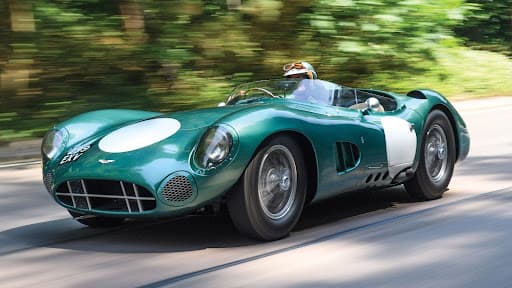
One reason why Aston Martin DBR1 was developed was to win races. Its lightweight design and strong straight-six motor helped it to triumph in long distance races in 1950s such as the famous 24 Hours of Le Mans.
Only five made DBR1s have a race history. The Aston Martin has turned into a performance brand in the world because of its fine looks, ideal proportions and its ability to perform on the road
1957 Ferrari 250 Testa Rossa
- Estimated Value: $38 million
- Number Produced: 34
- Unique Attribute: Red-painted cylinder heads
- Engine: 3.0L V12
- Horsepower: 300 hp
- Transmission: 5-speed manual
- Top Speed: 168 mph
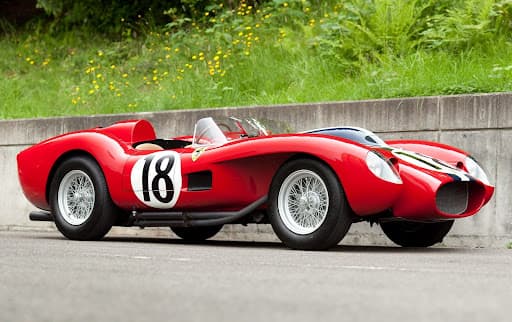
The Ferrari 250 Testa Rossa or the Red Head was a racing car. Its V12 engine was strong and dependable and it helped Ferrari to conquer various races in Le Mans and other significant races.
Its curvy body and the open cockpit made it one of the most beautiful race cars that were ever made. Today, it is one of the most coveted models of Ferrari, being a combination of power, history, and beautiful design.
READ ALSO: The Most Beautiful Vintage Cars
1961 Ferrari 250 GT California SWB Spider
- Estimated Value: $18 million
- Number Produced: 56
- Unique Attribute: Specially made for the American market
- Engine: 3.0L V12
- Horsepower: 280 hp
- Transmission: 4-speed manual
- Top Speed: 150 mph
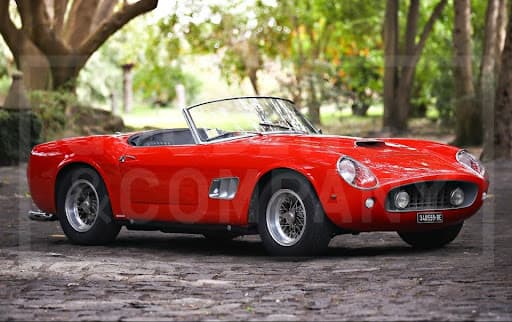
The 250 GT California Spider was made as a grand and thrilling automobile, which was equipped to match the sunny California way of life. It was a blend of the Ferrari racing genes and the trendy convertible that could be used to drive along the coast.
It is among the fewest Ferrari models with just 56 short-wheelbase models made. It has become popular when it appeared in movies and remains a dream car to any collector in the world.
1962 Aston Martin DB4 GT Zagato
- Estimated Value: $16 million
- Number Produced: 19
- Unique Attribute: Handcrafted Italian body
- Engine: 3.7L inline-6
- Horsepower: 314 hp
- Transmission: 4-speed manual
- Top Speed: 153 mph
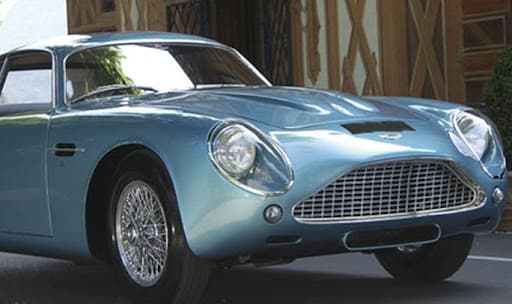
The DB4 GT Zagato is the perfect blend of British performance and Italian beauty. It was accelerated and smoother than the standard DB4 GT with its lightweight aluminum body by Zagato.
Only 19 of them were built and each one was a masterpiece. Its racing heritage and aerodynamic look have contributed to the fact that it is an important icon of the automotive art of the mid-century.
1962 Ferrari 250 GTO
- Estimated Value: $70 million
- Number Produced: 36
- Unique Attribute: Most valuable collector car ever
- Engine: 3.0L V12
- Horsepower: 300 hp
- Transmission: 5-speed manual
- Top Speed: 174 mph
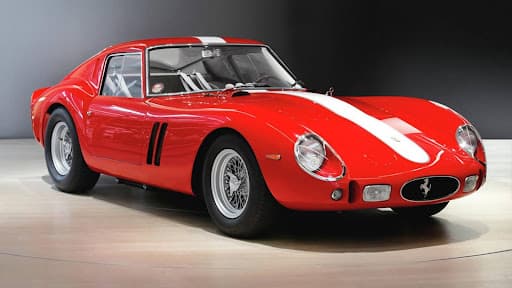
Ferrari 250 GTO is the holy grail of antique cars. It was a racing and beauty car with light body but with the Ferrari V12 power which was iconic. The vehicles were custom-crafted and somewhat dissimilar and therefore unique.
It was the most expensive car that was sold in the 1960s and continues to rule the racing world. Having possession of one is like having a piece of automobile royalty
1964 Ford GT40
- Estimated Value: $11 million
- Number Produced: 105
- Unique Attribute: Built to beat Ferrari at Le Mans
- Engine: 4.7L V8
- Horsepower: 485 hp
- Transmission: 5-speed manual
- Top Speed: 205 mph
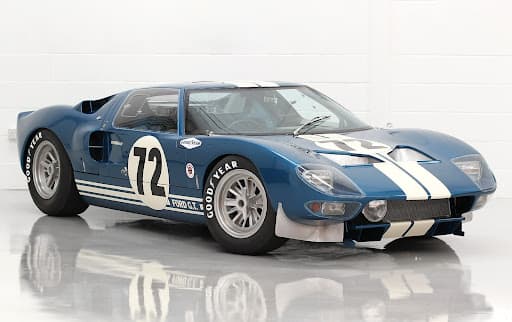
Ford GT40 was the reaction of the American nation to the superiority of Ferrari in the sphere of racing. It was built on a foundation of pride and rivalry, and went on to win the 24 Hours of Le Mans four times in a row, the period being 1966-1969.
This made it a racing legend because it was low-slung and raw. The GT40 proved that American engineering could put its best foot forward and compete with the most of Europe.
1970 Porsche 917
- Estimated Value: $16 million
- Number Produced: 25
- Unique Attribute: Porsche’s first Le Mans–winning car
- Engine: 4.5L flat-12
- Horsepower: 580 hp
- Transmission: 5-speed manual
- Top Speed: 240 mph
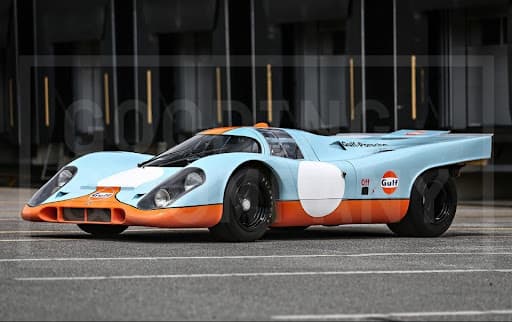
The Porsche 917 was an innovative car that transformed endurance racing. It was incredibly powerful and fast, and assisted Porsche to win the first overall Le Mans in 1970.
It was designed to the extreme and inspired future race cars over the decades. The 917 has been one of the most renowned engineering works in the history of motorsport.
READ ALSO: Classic American Cars Worth Knowing
What Makes a Classic Car Rare?
Classic cars are rare for a number of reasons. Others were constructed in limited quantities, and others were famous for racing or design. The following are some of the main factors that make some cars more outstanding compared to others.
Limited Production Numbers
Where the number of cars manufactured is few, they soon become collector items. Most of the classic cars were produced in batches of less than 100 cars and which makes it very difficult to find one currently, making it very valuable to car enthusiasts.
Age of the Car
The older the cars are, the fewer are in good condition. Components become obsolete, and a great deal of them are lost with time. The smaller the number of surviving models, the rarer and more valuable the model will be, particularly when it is in good condition or perfectly original.
Popularity
Automotive vehicles that became famous because of their appearance, speed, or feature in films can become extremely collectible. The more the fans a car has, the more people desire to own it, which, of course, raises its demand and rarity.
Historical Significance
There are classic cars that are associated with well-known races, owners or historic events. This history renders them invaluable. A vehicle that contributed to the development of the motor industry or won a significant race is usually considered to be a real historical artifact.
Current Condition
Condition is an important factor in rarity. Cars in their original state or those that have been well restored are worth a lot more. There are not as many that have been preserved in their original state and so mint-condition classics are more difficult and more costly to find.
Unique Features
Classic cars that are special in terms of engines, body design or new technologies are unique. These special features, such as odd headlights or experimental motors make the car more attractive to the collector and more rare than the ordinary versions.
Exclusivity
When there is only a small number of one model available in the market, then that particular car becomes unique and special. There are models with only one or two surviving examples, which makes them a legendary collectible, the best of their time.
Special Modifications
Also, special cars include cars with factory-tuned engines, racing cars, and coach-built cars. Such modifications render them unique and give them a personal narrative to their history, which makes them even more unique and emotionally attached to classic car fans.
Frequently Asked Questions About Rare Classic Cars
Some of the rarest classic automobiles include the Benz 300 SLR Uhlenhaut Coupe, Bugatti Type 57SC, and Ferrari 250 GTO. These old cars are very valuable as a result of their low production, rich history, and designs.
The Chrysler Crossfire SRT-6, Subaru SVX, AMC AMX, Volkswagen Corrado, and Pontiac Solstice GXP are some of the rare yet affordable classic cars. These neglected models have special features and high value to collectors looking at low-cost project cars.
The Uhlenhaut Coupe 300 SLR is the most unique and the most valuable car of all time. There are only two models, with a 3.0-liter engine and gullwing doors. One was auctioned off for more than $143 million.

Content Writer
Peter Adewale is an experienced automotive writer with more than eight years of content writing experience. At Classic Decoder, he creates informative articles on classic cars, vehicle history, VIN research, restoration, and collector-focused automotive topics. Known for his research-driven and reader-focused approach, Peter is passionate about producing content that helps enthusiasts and buyers better understand vintage vehicles, verify important details, and make confident ownership decisions.