
Decode Classic VINs to Get Vehicle History Report and Build Sheet
Popular Articles
Document Your Restomod Donor Before Pulling the Original Engine
Buying a Restomod With Thin Paperwork: What the VIN Still Tells You
What to Check Before Buying a Restomod Car
How Vehicle History Reports Impact Classic Car Transactions
Paid Classic Car History Check Vs Free Report Compared
How to Check a Classic Car Auction History Before You Buy
How to Detect Mileage Rollback in Classic Cars
How to Spot Hidden Damage Before Buying a Classic Car
How a Build Sheet Helps in Classic Car Restoration
Build Sheet vs Car History Report: What’s the Difference?
Recommended Classic VIN Lookup Tools
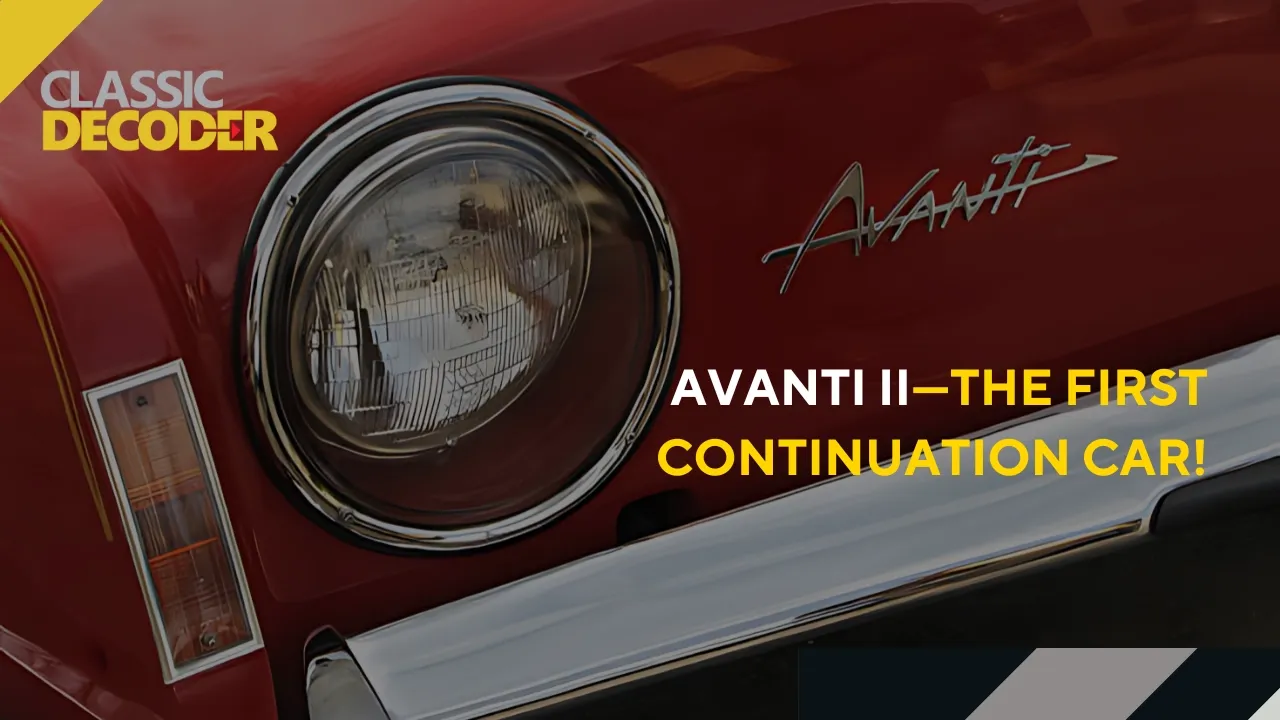
The Avanti may be one of the most polarizing designs ever created. Those who love it really love it, and those who don’t appreciate it loathe it. But among the former, at least six intrepid souls have been passionate enough about Raymond Loewy and Tom Kellogg’s creation to keep the car from dying—even when all but the nuttiest should have been looking for a wooden stake or a silver bullet.
The first continuation car was probably the Avanti II. The Avanti IIs sold to the public in 1966 were really the first “continuation cars,” built long before that dubious term was coined. Studebaker, which had been building wagons since the mid-19th century, finally expired that year. It built its last cars in exile in Hamilton, Ontario.
The consolation prize for the city of South Bend, IN—Studebaker’s former main manufacturing center—was the sale of the Avanti rights, tools, molds, and part of the plant to local dealers Leo Newman and Nate Altman.

Content Writer
Adewale Peter is an automotive researcher and writer specializing in classic and pre-1981 VINs, historical vehicle identification, factory documentation, and classic-vehicle records. He writes about older VIN formats, archival research, Build Sheets, title and registration issues, and the limitations of modern decoding tools when applied to classic vehicles.