
Decode Classic VINs to Get Vehicle History Report and Build Sheet
Recommended Classic VIN Lookup Tools
Classic Cars by Decade: 1950s, 1960s, and 1970s Icons Worth Knowing
Jun 21, 2026
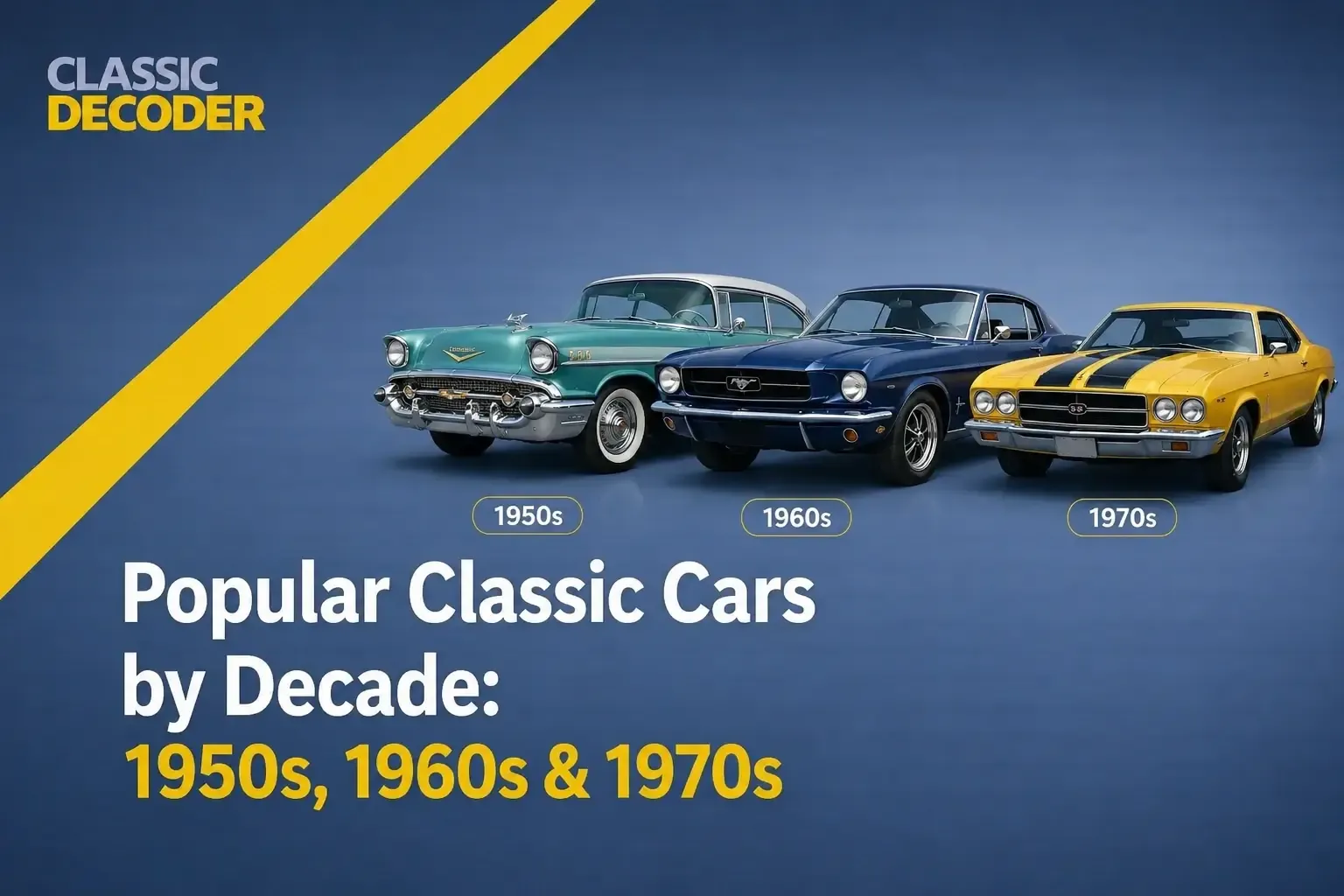
Some cars are more than old machines with shiny paint. They tell you what people cared about at the time. The 1950s loved chrome and confidence. The 1960s chased speed and attitude. The 1970s brought bold shapes, personal luxury, fuel concerns, and a few cars that still feel wonderfully strange.
This guide looks at popular classic cars by decade, from postwar American cruisers to muscle cars, European sports cars, supercars, compact icons, and collector favorites that still turn heads today.
Key Takeaway
 Popular classic cars by decade are easier to understand when you compare design, performance, culture, and buyer demand.
- The 1950s, 1960s, and 1970s each produced classics with very different personalities.
- Before buying, verify the VIN, history, condition, originality, and value range.
Why Look At Classic Cars By Decade?
Classic cars are easier to understand when you place them in their own era. A 1955 Chevrolet Bel Air, a 1965 Ford Mustang, and a 1977 Pontiac Firebird Trans Am are all classics, but they were built for very different buyers.
1. Each Decade Had Its Own Personality
The 1950s were big, bright, and optimistic. The 1960s were louder and faster. The 1970s were more mixed, with muscle cars, luxury coupes, small imports, and wedge-shaped supercars all sharing the road.
2. Design Trends Changed Fast
Tailfins, chrome, fastback roofs, long hoods, hidden headlights, woodgrain wagons, and sharp wedge shapes all tell a story. Sometimes you can spot the decade before you even know the model.
3. Value Depends On More Than Age
Age alone does not make a car valuable. Condition, originality, rarity, history, and demand all matter. Before buying or selling, it helps to compare real market data using a classic car values resource so you are not guessing from one listing.
Popular Classic Cars From The 1950s
The 1950s were full of style. American roads were filling with bigger, more expressive cars, while European brands pushed sports-car engineering in a different direction. You know what? That contrast is what makes this decade so fun.
1955 Chevrolet Bel Air
The 1955 Chevrolet Bel Air is one of the cleanest symbols of 1950s American car culture. It had fresh styling, a confident stance, and available V8 power that made it more than just a pretty cruiser.
Collectors still love the Bel Air because it feels approachable. It is stylish, recognizable, and supported by a strong restoration community. Buyers should check body panels, chrome trim, interior condition, engine details, and documentation before judging value.
1957 Ford Thunderbird
The 1957 Ford Thunderbird mixed sporty looks with personal luxury. It was not trying to be a bare-bones race car. It was more like a weekend jacket with a V8 under it, polished but still lively.
The Thunderbird gave buyers style, comfort, and performance in one package. That formula still works with collectors today.
1953 Chevrolet Corvette
The 1953 Corvette started America’s long sports-car story. Early versions were not the fastest Corvettes ever made, but they were important. The fiberglass body, two-seat layout, and fresh identity helped Chevrolet enter a new lane.
Today, early Corvettes are prized for history, rarity, and restoration quality. A correct example can be very different in value from one that has been heavily changed.
1955 Mercedes-Benz 300 SL
The Mercedes-Benz 300 SL was engineering theater. Gullwing doors, strong performance, and advanced design made it one of the most respected European classics of the decade.
Most buyers will not casually shop for a 300 SL, of course. Still, it belongs here because it helped shape how collectors think about performance, rarity, and prestige.
1959 Austin Mini
The Austin Mini proved a small car could have a huge impact. Its compact layout, clever packaging, and front-wheel-drive design changed the way city cars were built.
It was practical, charming, and later became a motorsport favorite. Not every classic needs a long hood and a rumbling V8. Sometimes smart design wins the room.
Porsche 550 Spyder
The Porsche 550 Spyder became famous for its lightweight feel, racing success, and strong link to 1950s sports-car culture. It was small, quick, and purposeful.
Because originals are rare, buyers should be careful with replicas and tribute builds. Documentation matters, especially when a car’s story is part of its value.
Popular Classic Cars From The 1960s
The 1960s may be the decade many enthusiasts picture first. Pony cars arrived. Muscle cars got serious. European sports cars became poster material. The whole decade had a pulse.
For a wider look at American models from this era and beyond, this guide to classic American cars gives helpful context.
Ford Mustang
The Ford Mustang arrived in 1964 and changed the market fast. It had sporty styling, strong options, and a price that brought younger buyers into showrooms.
The Mustang helped create the pony car category: long hood, short rear deck, personal style, and plenty of ways to customize. Trim, body style, drivetrain, and documentation can all affect value.
Pontiac GTO
The Pontiac GTO helped define the muscle car formula. Take a midsize car, add serious V8 power, give it attitude, and price it within reach of performance-minded buyers.
That sounds simple now, but it was bold at the time. The GTO became a symbol of American performance and still carries weight with collectors. If you enjoy this type of car, explore more examples in this guide to the best classic muscle cars.
Chevrolet Camaro
The Camaro was Chevrolet’s answer to the Mustang, and it did not arrive quietly. Early Camaros offered strong styling, serious performance packages, and a platform that became a favorite for collectors and builders.
As with many 1960s performance cars, proof matters. Badges are easy to add. Correct drivetrain details and records are harder to fake.
Chevrolet Corvette Stingray
The Corvette Stingray brought sharp styling and real performance into the 1960s. Its dramatic body lines and engine options made it one of the decade’s strongest American sports cars.
Buyers should look closely at engine codes, frame condition, body repairs, and restoration quality. A Corvette can look amazing and still hide expensive work.
Jaguar E-Type
The Jaguar E-Type blended elegance and speed in a way few cars ever have. Long hood, low shape, graceful lines. It still looks special.
But beauty does not cancel out maintenance reality. Rust, service history, and restoration quality should be checked carefully before assigning value.
Aston Martin DB5
The Aston Martin DB5 became famous partly because of film culture, but the car itself deserves the attention. It was refined, stylish, and built for grand touring.
For collectors, the DB5’s appeal comes from rarity, design, heritage, and provenance. It is the kind of car where paperwork can be almost as important as paint.
Porsche 911
The Porsche 911 debuted in the 1960s and built a legacy that still runs strong. Its rear-engine layout, clean shape, and driver-focused character made it different from almost everything else.
Early 911s are now highly collectible. Rust, originality, mechanical condition, and service records should all be reviewed before purchase.
Ferrari 250 GTO
The Ferrari 250 GTO sits in a league of its own. It was built for racing, produced in very small numbers, and became one of the most respected collector cars ever.
Most people will never buy one. Fair enough. But as a symbol of 1960s performance and rarity, it deserves its place.
Popular Classic Cars From The 1970s
The 1970s were complicated. Performance rules changed. Fuel prices mattered more. Styling became bolder, sometimes heavier, sometimes sharper. And somehow, that mix gave us cars with real personality.
1977 Pontiac Firebird Trans Am
The 1977 Pontiac Firebird Trans Am became a cultural icon. The hood graphic, aggressive stance, and movie fame helped make it one of the most recognizable 1970s classic cars.
Collectors still love it because it feels dramatic without apology. Check drivetrain details, body condition, trim, and signs of past modification before buying.
1977 Pontiac Firebird Formula
The Firebird Formula offered performance flavor with less visual drama than the Trans Am. For some buyers, that is the point.
It had strong Pontiac character, available V8 power, and cleaner styling. It is a good example of how one model line can attract different types of collectors.
1972 Chevrolet Corvette
The 1972 Corvette is valued for its shark-style body and its place near the end of an earlier Corvette design era. It still had the visual punch people expect from a classic Corvette.
Condition, originality, engine options, and documentation can make a big difference in value.
1974 Lamborghini Countach LP400
The Countach LP400 looked like it came from another planet. Wedge shape. Scissor doors. Mid-mounted V12. Even parked, it feels loud.
The early LP400 is especially admired for its cleaner design. Because these cars are rare and valuable, expert inspection is essential.
1975 Honda Civic CVCC
The Honda Civic CVCC showed that innovation did not need to be huge or expensive. It was efficient, compact, and smart at a time when fuel economy became a serious issue.
It may not have muscle-car thunder, but it changed how many buyers viewed small cars. That kind of influence matters.
1970 AMC Gremlin
The AMC Gremlin is quirky, and honestly, that is part of the charm. Its unusual shape made it stand out then, and it still stands out now.
Collectors often appreciate the Gremlin because it feels different. Not every classic has to be elegant. Some classics are remembered because they had nerve.
1977 Oldsmobile Cutlass Supreme
The Oldsmobile Cutlass Supreme was one of the defining personal luxury cars of the 1970s. It offered comfort, style, and broad appeal.
For newer collectors, it can be attractive because parts and knowledge are easier to find than with many rarer models.
1973 Ford Country Squire
The Ford Country Squire represents the classic American family wagon. Woodgrain-style trim, big space, and road-trip energy all come with the package.
Classic trucks and wagons have gained more attention because they feel practical and nostalgic. If you like old haulers, this guide to the best classic trucks is a good next read.
How Do You Choose The Right Decade?
Choosing the “best” decade is tricky. The honest answer is: it depends on what you want from the car.
1. Choose The 1950s For Style
Go for the 1950s if you love chrome, curves, tailfins, two-tone paint, and show-car presence.
2. Choose The 1960s For Performance
The 1960s are hard to beat if you want pony cars, muscle cars, sports cars, and racing influence.
3. Choose The 1970s For Variety
The 1970s offer personal luxury, late muscle, compact imports, wagons, and wild supercars. It is a mixed bag, but a good mixed bag.
4. Choose By Condition, Not Just Emotion
A famous car in poor condition can cost more to restore than a less famous car that has been maintained well. Let the heart vote, sure, but let the inspection speak too.
What Should You Check Before Buying?
Before buying any classic, slow down and verify the car. A glossy photo can hide a long list of repairs.
1. Confirm The VIN
Use a classic car vin lookup to help confirm the vehicle’s identity, specs, and available factory details. This is especially useful for older vehicles that may not use modern VIN formats.
2. Review The History
A classic vehicle history report can help you check available title records, accident history, ownership changes, auction records, mileage issues, theft records, and lien or loan records.
3. Compare Value Carefully
A realistic price depends on condition, originality, documentation, market demand, and recent sales. Do not rely on one listing or one seller’s story.
4. Inspect The Car In Person
Check rust, frame condition, paint quality, interior wear, engine health, suspension, brakes, glass, and electrical systems. For higher-value cars, hire someone who knows the model.\
Final Thoughts
The best classic car is not always the rarest or most expensive one. Sometimes it is the car that fits your taste, budget, and plan.
The 1955 Bel Air tells a story of postwar confidence. The Mustang and GTO capture the spark of the 1960s. The Trans Am, Countach, Civic CVCC, and Gremlin show how wide the 1970s really were.
So take your time. Learn the decade. Check the model. Verify the records. A little homework now can save a lot of regret later.

Content Writer
Peter Adewale is an experienced automotive writer with more than eight years of content writing experience. At Classic Decoder, he creates informative articles on classic cars, vehicle history, VIN research, restoration, and collector-focused automotive topics. Known for his research-driven and reader-focused approach, Peter is passionate about producing content that helps enthusiasts and buyers better understand vintage vehicles, verify important details, and make confident ownership decisions.